What Blue Line would provide
- An adoption fee waiver for one suitable companion chinchilla.
- A conversation to help choose a good match.
- A care guide and setup review before pickup.
- One check-in around two weeks after placement.
 Blue Line ChinchillasILLINOIS
BLUE LINE COMPANIONS · FOR VETERANS
A chinchilla companionship pilot for veterans, built around a thoughtful match and a caring home.
How to applyPILOT MILESTONE · FIRST TRIAL PLACEMENT
A PERSONAL COMMITMENT
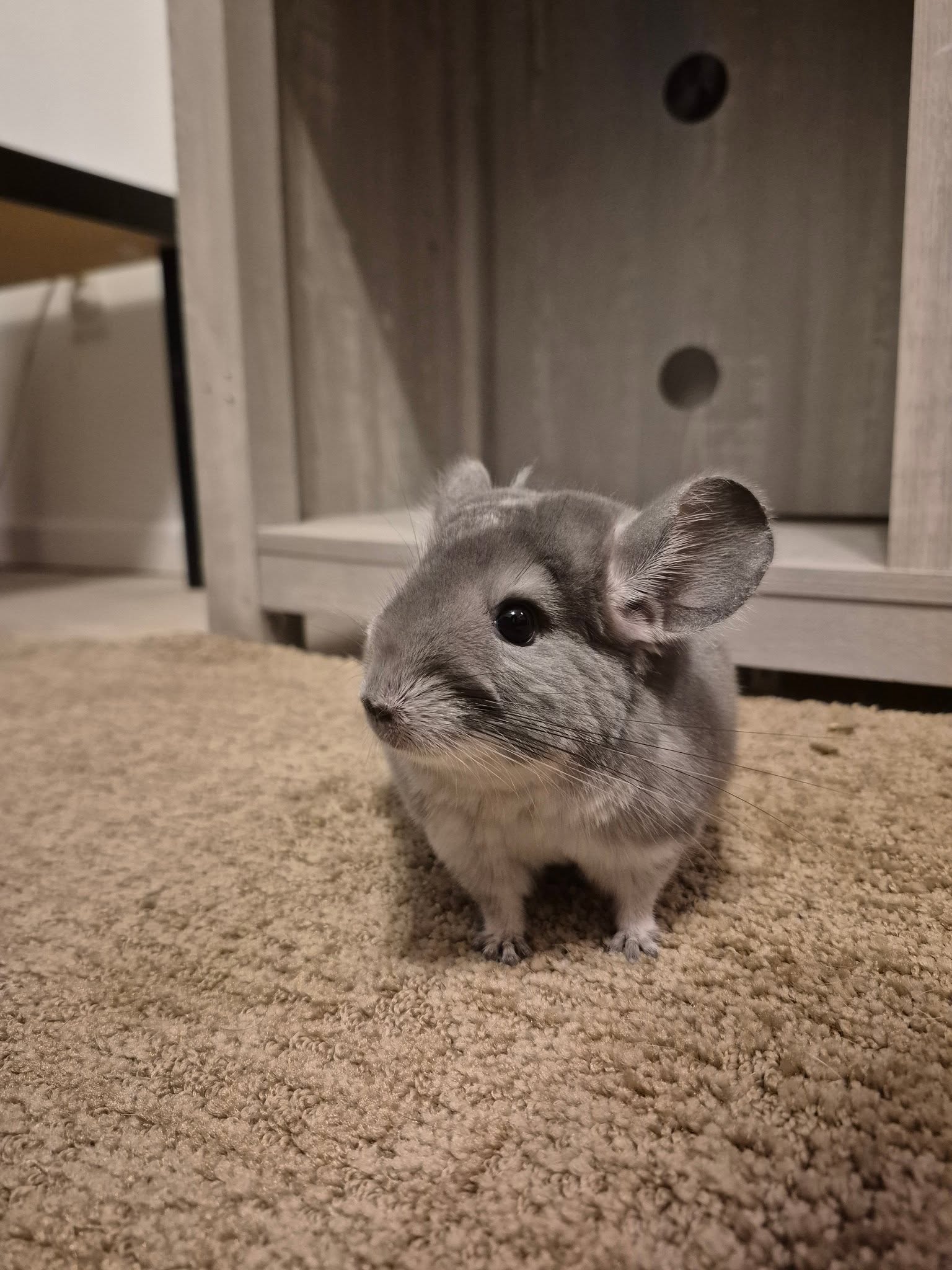
Founded by a retired law enforcement officer, Blue Line Chinchillas is developing Blue Line Companions, a small pilot designed to help veterans welcome a companion chinchilla into their lives.
The first chinchilla went out for a trial placement on September 18, 2026. This is the beginning of a pilot, with the broader program still taking shape.
Our proposed approach is simple: waive the adoption fee for a suitable companion chinchilla, help the veteran prepare, and check in after the animal goes home. Placements would be limited by availability and the needs of both the person and the animal.
THE PROPOSED PILOT
A PTSD diagnosis would not be required. Applicants would not need to describe their trauma.
The proposed waiver covers the animal’s adoption fee, not the lifetime cost of care.
These are proposed terms for owner review. A placement would require a conversation and confirmation from Blue Line. The pilot offers companion pets, without a promise of therapy, service-animal training, or certification.
PETS, CONNECTION & PTSD
For some people living with PTSD, the bond with a pet can be a meaningful part of everyday life. NIH describes research linking animal interaction with less loneliness, greater feelings of support, and improved mood, while emphasizing that results are mixed and benefits vary. Read NIH’s overview ↗
Sharing your home with an animal can offer companionship and moments of comfort.
Feeding, cleaning, and getting to know a pet create regular opportunities to care for another living being.
The goal is a relationship that works for both the veteran and the chinchilla, with space for the animal’s individual personality.
This pilot does not establish that chinchillas treat PTSD. The VA’s guidance on dogs and PTSD distinguishes the comfort of companionship from effective PTSD treatment. Pet companionship should not replace care from a qualified mental health professional. VA: Dogs and PTSD ↗
PTSD treatments include psychotherapy, medication, or a combination. If you are considering a pet as part of your support system, discuss that decision with your care team. NIMH: Understanding PTSD ↗
HOW TO APPLY
Send a short expression of interest. Blue Line can then confirm the pilot terms and talk through whether a chinchilla would be a good fit. An inquiry does not reserve an animal or guarantee approval.
Share your name, city and state, and a little about your home and experience with pets.
Discuss care expectations, the proposed fee waiver, and available animals. Any service verification can be discussed directly, without sending documents in the initial inquiry.
If a placement is approved, confirm the enclosure and supplies before arranging pickup. Plan for a gradual introduction and a follow-up conversation.