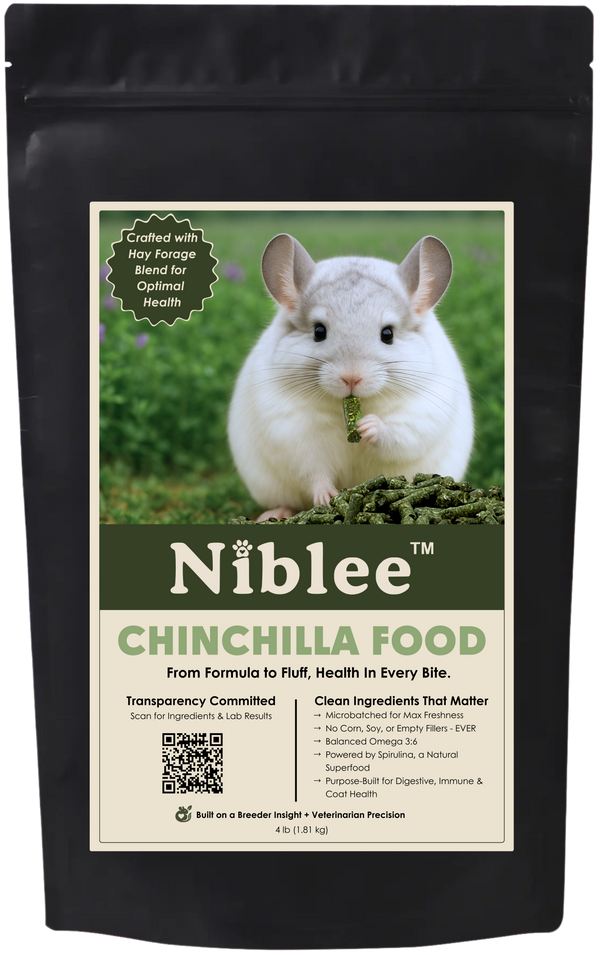
Niblee
Explore Niblee’s chinchilla feed and feeding resources.
Save 20% with code BLUELINE at checkout.
Visit Niblee Blue Line ChinchillasILLINOIS
OWNER RESOURCES
A practical reference for preparing a home, building a daily routine, and recognizing when your chinchilla needs help.
Adapted with the author’s permission from Chinchilla Care 101: The Ultimate Reference Guide by Shahna Powell.
A successful homecoming starts before pickup. Have the enclosure assembled, the room temperature stable, food and water ready, and an exotic-animal veterinarian identified. A chinchilla needs daily attention and a home that can stay cool throughout the year.
Ask which pellets, hay, and dust the chinchilla currently uses. Find out about its age, personality, handling experience, known health concerns, and any existing companion. Arrange enough familiar feed for the transition and discuss changes before making them.
Plan who will provide care when you travel. Make sure everyone in the household understands that handling must be gentle and interactions should follow the animal’s comfort level.
Book reference: Chapters 7, 8 & 11.
Back to guide contents ↑Choose an enclosure for its usable space, ventilation, security, and ease of cleaning. A product labeled for small animals still needs to be checked for chinchilla safety. Avoid aquariums and other poorly ventilated, solid-sided enclosures.
The book’s preferred starting dimensions are 36 inches wide by 24 inches deep by 24 inches high. Floor space and a safe layout matter more than height alone. The right setup also depends on the animal’s age, mobility, and companions.
Arrange sturdy ledges close together, with secure resting places and no long, unobstructed drops. For tall cages, the book recommends dividing the enclosure into levels no more than 30 inches high. Check every opening for the possibility of escape or a trapped head, leg, or foot.
Remove accessible plastic that can be chewed. Use suitable metal pans or properly fitted anti-pill fleece over protected surfaces, and check fabric regularly for chewing or damage. Provide comfortable resting areas. Avoid wire ramps and shelves that can trap feet.
Keep a hide available so your chinchilla can retreat. Secure bowls, bottles, shelves, and toys firmly. Check hardware and edges during cleaning, and adjust the layout for young, older, injured, or less mobile animals.
Book reference: Chapter 8, pp. 50–71.
Back to guide contents ↑Stable cooling is a basic requirement. Keep the cage out of direct sunlight and away from heating vents, kitchens, and rooms that become hot in the afternoon. Measure conditions at the enclosure rather than relying only on a thermostat elsewhere in the house.
The book distinguishes a resting environment from an activity environment: its recommended play temperature is 55–65°F, and it advises against out-of-cage activity above 65°F. It sets 75°F as an upper room limit, not a temperature to aim for. Maintain a cooler margin and account for humidity, health, and activity.
The book gives a humidity range of 40–60%. Monitor both temperature and humidity, keep air circulating without a direct draft, and use a dehumidifier where needed. A fan does not replace air conditioning.
Know where you can relocate your chinchilla if the air conditioning or electricity fails. Keep a carrier accessible and arrange a dependable, air-conditioned destination in advance. Do not wait for the animal to show distress before responding to rising temperatures.
Book reference: Chapter 12, pp. 96–105.
Back to guide contents ↑The book recommends continuous access to quality alfalfa-based chinchilla pellets alongside high-quality hay. Pellets provide balanced nutrition; hay contributes fiber, chewing time, and foraging opportunities. Keep both fresh and protect stored feed from moisture, pests, and contamination.
Look for a feed formulated for chinchillas without mixed-in fruit, nuts, or seeds. The book favors corn-free feed and cautions against selecting a diet from packaging claims alone. Discuss the specific product with the breeder, especially if the animal has special health or life-stage needs.
A sudden switch can disrupt an established routine and diet. Start with the chinchilla’s familiar feed and make any change gradually with guidance. Follow an individual veterinary feeding plan if one has been prescribed.
Offer clean, good-quality hay, such as timothy or orchard grass. Reject hay that is damp, musty, visibly moldy, or contaminated. Replace soiled hay and store the supply somewhere dry with appropriate airflow.
Fresh water must always be available. Confirm that the chinchilla knows how to use its drinking setup, and check that a bottle actually dispenses water. Look for blockages and leaks, clean the bottle and spout, and replace water regularly. A full bottle does not prove the animal can drink.
Book reference: Chapters 15 & 16.
Back to guide contents ↑Keep the everyday diet consistent. The book advises against sugary foods, fruit, nuts, and seeds, and recommends using suitable dried herbs and properly prepared wood sparingly for variety and enrichment.
Do not assume that a plant is safe because it is natural, or that a branch is suitable because the tree’s name sounds familiar. Species identification, pesticide exposure, preparation, and cleanliness all matter. Use a verified chinchilla-safe source.
Fresh hay placed in different safe locations, suitable chew sticks, and a thoughtfully arranged enclosure can encourage exploration. Inspect toys for glue, coatings, exposed fasteners, loose fibers, or small parts that could be swallowed. Remove items as they become damaged.
There is no need to add supplements simply to make a complete diet seem more varied. Discuss supplements with the breeder and veterinarian, particularly when treating a suspected deficiency or illness.
Book reference: Chapters 15 & 17.
Back to guide contents ↑Provide a stable bath container large enough for the chinchilla to turn and roll freely. Use dust intended for chinchillas from a reliable source. Keep it dry and remove droppings and other contamination.
The book describes a routine of roughly two or three baths per week, adjusted to the animal, handling, humidity, and skin condition. Greasy fur, dry or flaky ears, and irritation are reasons to review both the bathing routine and the dust being used.
Dust bathing is the normal grooming method. Do not give routine water baths. If the coat becomes wet, badly soiled, or contaminated with a substance, ask your veterinarian how to manage it safely.
Notice new bald patches, broken skin, unusual matting, or a change in grooming behavior. Coat changes can have different causes, so seek advice rather than automatically adding treatments to the dust.
Book reference: Chapter 8, pp. 62–64.
Back to guide contents ↑Small daily tasks make the enclosure easier to maintain and help you notice changes early. Remove wet or dirty bedding, soiled hay, and spoiled food. Refresh food and water, and check the enclosure and animal at the same time.
Plan a thorough clean at least weekly, with more frequent bedding changes where needed. Wash bowls and water equipment, clean surfaces, and inspect shelves, hides, and hardware. Move the chinchilla to a secure space while you work.
Use suitable cleaning products according to their directions. Rinse when required and allow surfaces to dry before returning the animal. Avoid heavily fragranced products. Ordinary cleaning and disinfection are different tasks; ask your veterinarian for a specific protocol after an infectious illness.
The book discusses kiln-dried pine and poplar shavings and advises against cedar. Inspect stored bedding for moisture, mold, and contamination. If using fitted fleece, change and wash it often enough to keep the surface dry, and remove it if the animal chews or ingests it.
Book reference: Chapter 13, pp. 106–109.
Back to guide contents ↑Give a new chinchilla time to learn its surroundings. Keep the first days predictable, with familiar food and a quiet place to rest. Approach calmly, speak gently, and let curiosity guide early interactions. Avoid repeatedly reaching into a hide or chasing the animal around the cage.
Ask the breeder to demonstrate safe handling before pickup. Support the body and hindquarters, keep movements controlled, and work close to a safe surface to reduce the consequences of a jump. Do not squeeze the chest, pull on fur, or lift by the tip of the tail.
Children need direct adult supervision. A chinchilla that approaches you may still dislike being held. Short, calm interactions can build familiarity without forcing cuddling.
Notice how your chinchilla usually moves, rests, eats, and responds to you. Give it a retreat and respect signs that it wants space. Sudden changes in behavior deserve attention, particularly when they occur with appetite, droppings, or weight changes.
Book reference: Chapters 11, 14 & 19.
Back to guide contents ↑Provide places to hide, perch, chew, and forage. The book favors this kind of enclosure enrichment over relying on a running wheel, and discusses wheel-related injury and stress concerns. A wheel is not needed to build a varied, engaging habitat.
Block access to electrical cords, houseplants, vents, toilets, furniture mechanisms, and small gaps. Remove anything unsafe to chew. Keep other pets out and supervise continuously. Chinchillas should not roam unattended.
Check the room temperature before activity and follow the cooler activity conditions described above. Keep sessions suited to the animal’s age, health, and response. Stop if the animal appears distressed or unusually tired, and return it calmly to its enclosure.
Routine changes do not have to be elaborate. Rotate suitable chew items, replenish hay, and check that the enclosure still offers safe routes between resting places.
Book reference: Chapters 9, 10 & 12.
Back to guide contents ↑Compatibility is individual. Do not place unfamiliar chinchillas together and expect them to work out a relationship. Discuss quarantine, introductions, sex confirmation, and housing with an experienced breeder and your veterinarian before bringing another animal home.
Have a separate complete enclosure available. Monitor introductions and established pairs for chasing, injuries, resource guarding, or one animal being unable to rest or eat. If animals fight or one is being injured, separate them safely and seek guidance.
Do not mix males and females casually. Breeding brings additional health, welfare, and housing responsibilities. If you are welcoming a pet, be clear about how accidental breeding will be prevented.
Book reference: Chapter 28.
Back to guide contents ↑Learn what is normal for your chinchilla. Look at appetite, water use, droppings, movement, coat, eyes, and behavior each day. Weigh regularly on a gram scale and record the results so gradual changes are easier to spot.
Watch for drooling, a wet chin, dropping food, changing food preferences, or weight loss. Normal-looking front teeth do not rule out a problem deeper in the mouth. A veterinarian should assess suspected dental disease.
Not eating, markedly fewer or absent droppings, difficulty breathing, collapse, suspected overheating, serious injury, or severe diarrhea require prompt veterinary attention. Do not wait for a website or breeder to diagnose the problem.
Arrange care with a veterinarian who treats chinchillas before an emergency. Ask about their after-hours arrangements. Do not start human medications, antibiotics, dental trimming, or assisted feeding without veterinary guidance appropriate to the animal’s condition.
Additional health reference: Merck Veterinary Manual: Chinchillas.
Book reference: Chapters 20, 21, 29–31.
Back to guide contents ↑Use a secure, ventilated carrier suitable for a chinchilla and protect it from direct sunlight. Cool the vehicle before loading and keep conditions stable throughout the trip. Never leave the carrier unattended in a parked vehicle.
Carry familiar feed, hay, water, and the details of the destination and veterinarian. Secure the carrier so it cannot slide or tip. Plan stops and a backup destination if cooling fails.
Revisit the plan when your household, animal’s health, or local veterinary arrangements change.
Book reference: Chapters 12 & 29.
Back to guide contents ↑Explore Niblee’s chinchilla feed and feeding resources.
Save 20% with code BLUELINE at checkout.
Visit Niblee
Connect with GCA for chinchilla education, welfare initiatives, and a community of owners and breeders.
Explore GCAFURTHER READING
This website offers a condensed owner’s reference. Shahna Powell’s Chinchilla Care 101: The Ultimate Reference Guide covers the topics in greater depth, including anatomy, behavior, nutrition, and health.
Explore the bookGeneral husbandry guidance does not replace individual veterinary care.